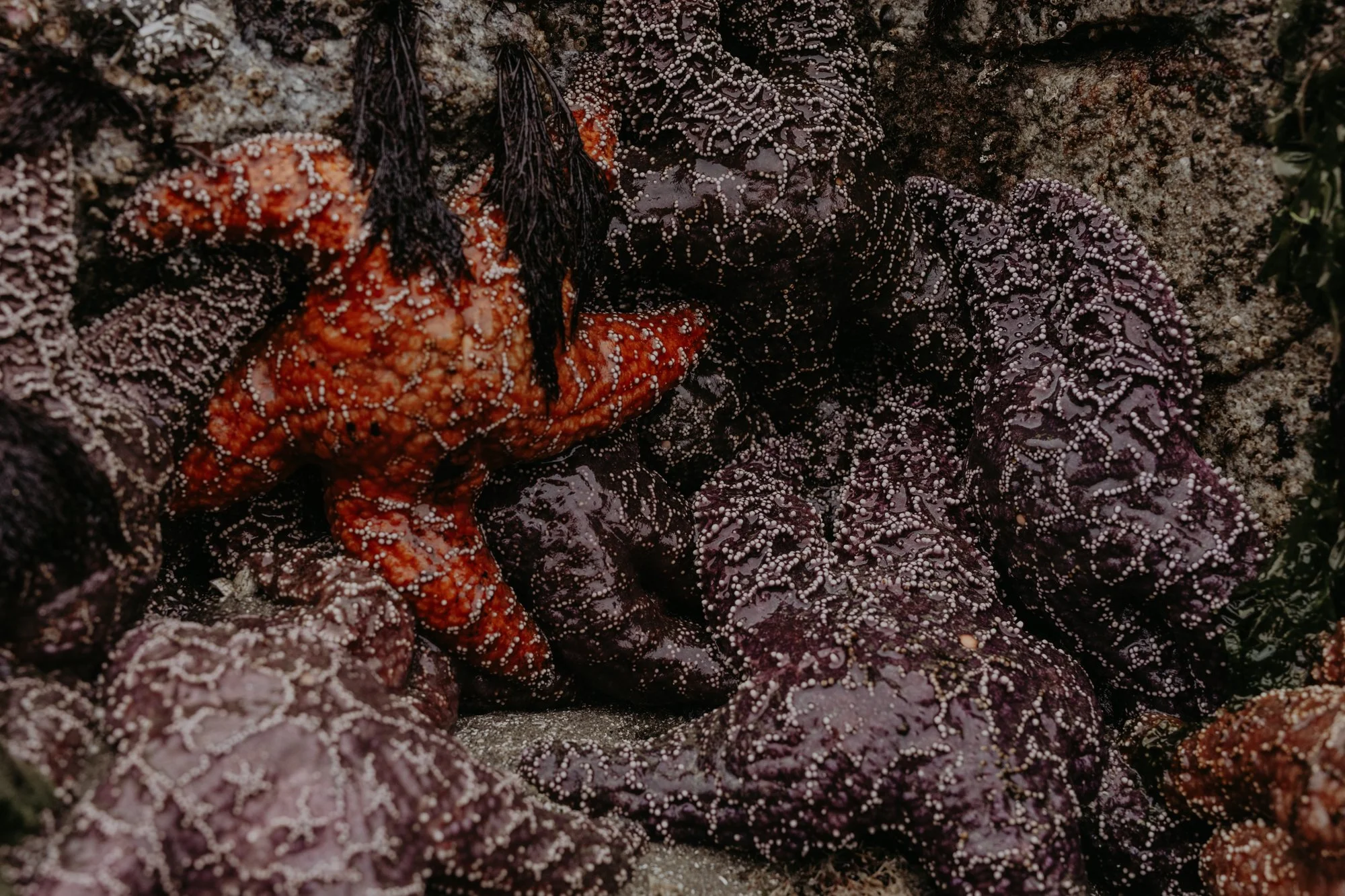
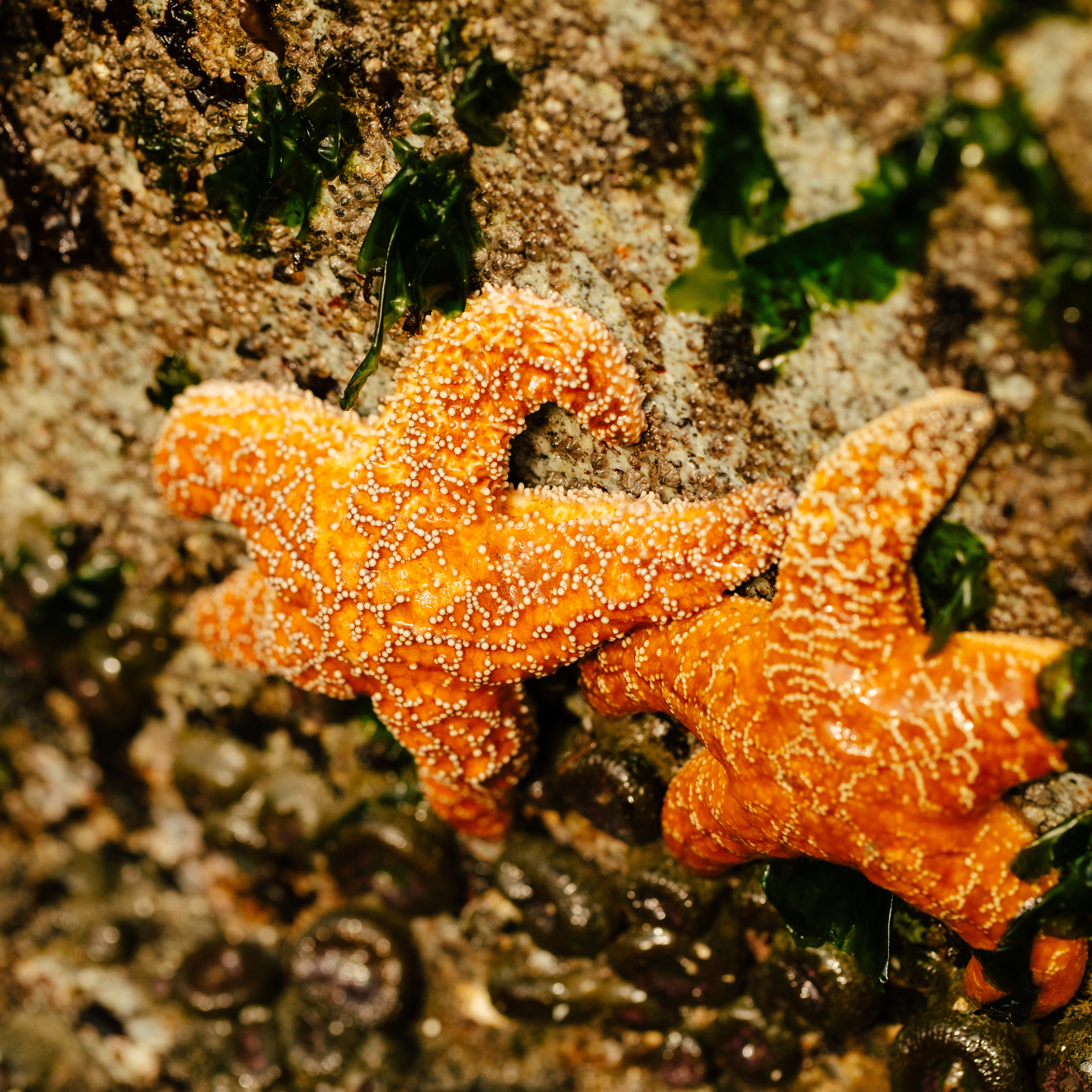
Unfortunately, in the past few years, sea stars all along the Pacific coast of North America have experienced a mass die-off due to a disease call Sea Star Wasting Syndrome (SSWS). The first case of SSWS was documented June 2013 affecting Ochre stars on the coast of Washington state and soon spread along the entire coast between Alaska and Mexico. Up to 20 different species of sea stars have been affected by SSWS which is characterized by symptoms including lesions, limb autotomy, loss of turgor, and eventually death by rapid tissue disintegration.
Starting in 2015, Strawberry Isle Marine Research Society (SIMRS) began monitoring for Sea Star wasting Syndrome (SSWS) along the coastline between Tofino and Ucluelet, BC, and now after amalgamating in 2023, Redd Fish Restoration Society is continuing this important long-term monitoring project.
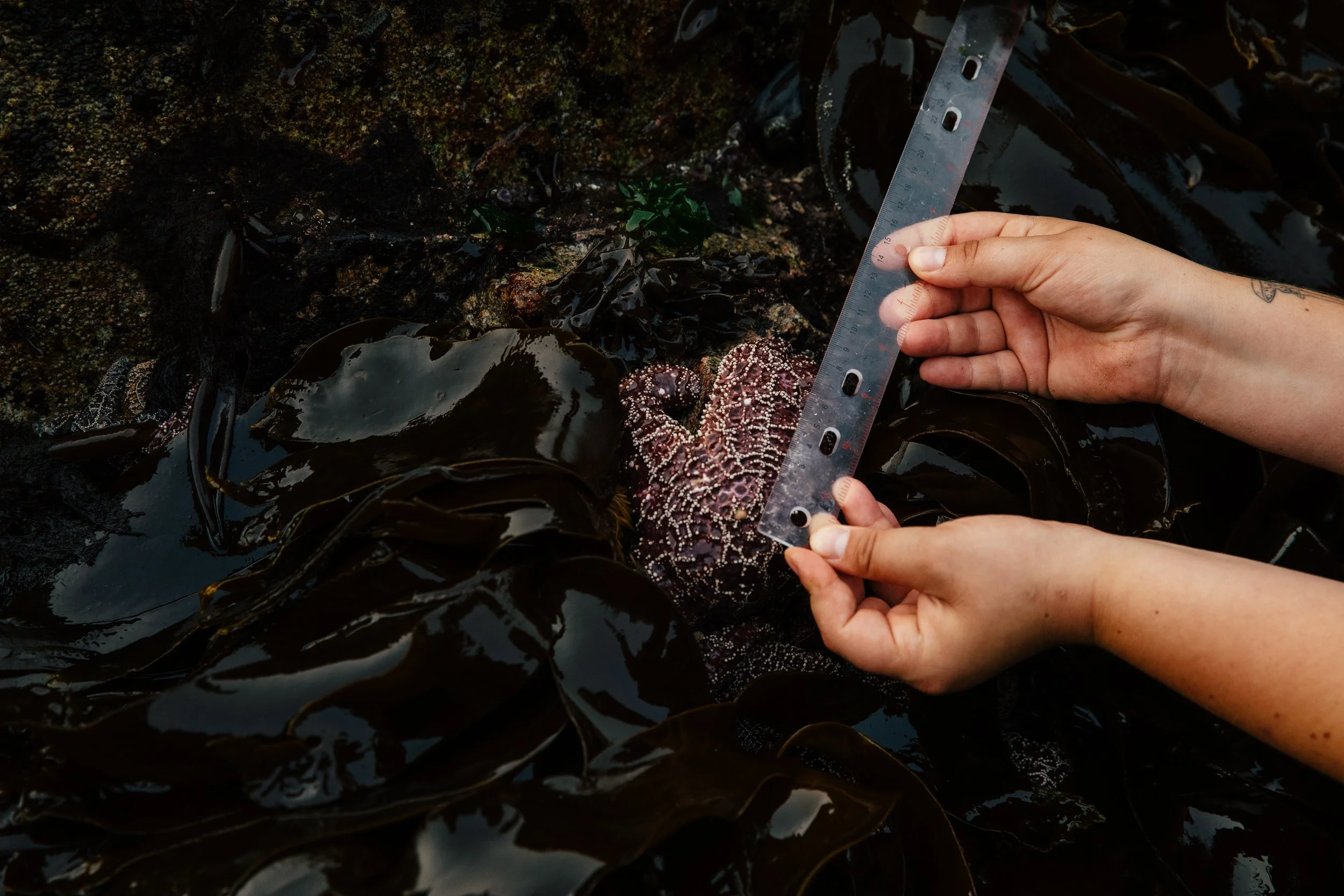
We conduct sea star surveys once a month during low tide at three intertidal locations from April to September. Our methodology is based off of those from the Pacific Rocky Intertidal Monitoring Lab of UCSC. Data is collected for the number, species, size, and degree of wasting syndrome of sea stars. At the end of each field season our data is shared with the Multi-Agency Rocky Intertidal Network (MARINe) to contribute to a larger North America-wide database to be used as open source data for SSWS research. The information collected from this data can be used to track seasonal and long-term trends in sea star species abundance, diversity, and level of wasting disease both within small-scale and large-scale regions.
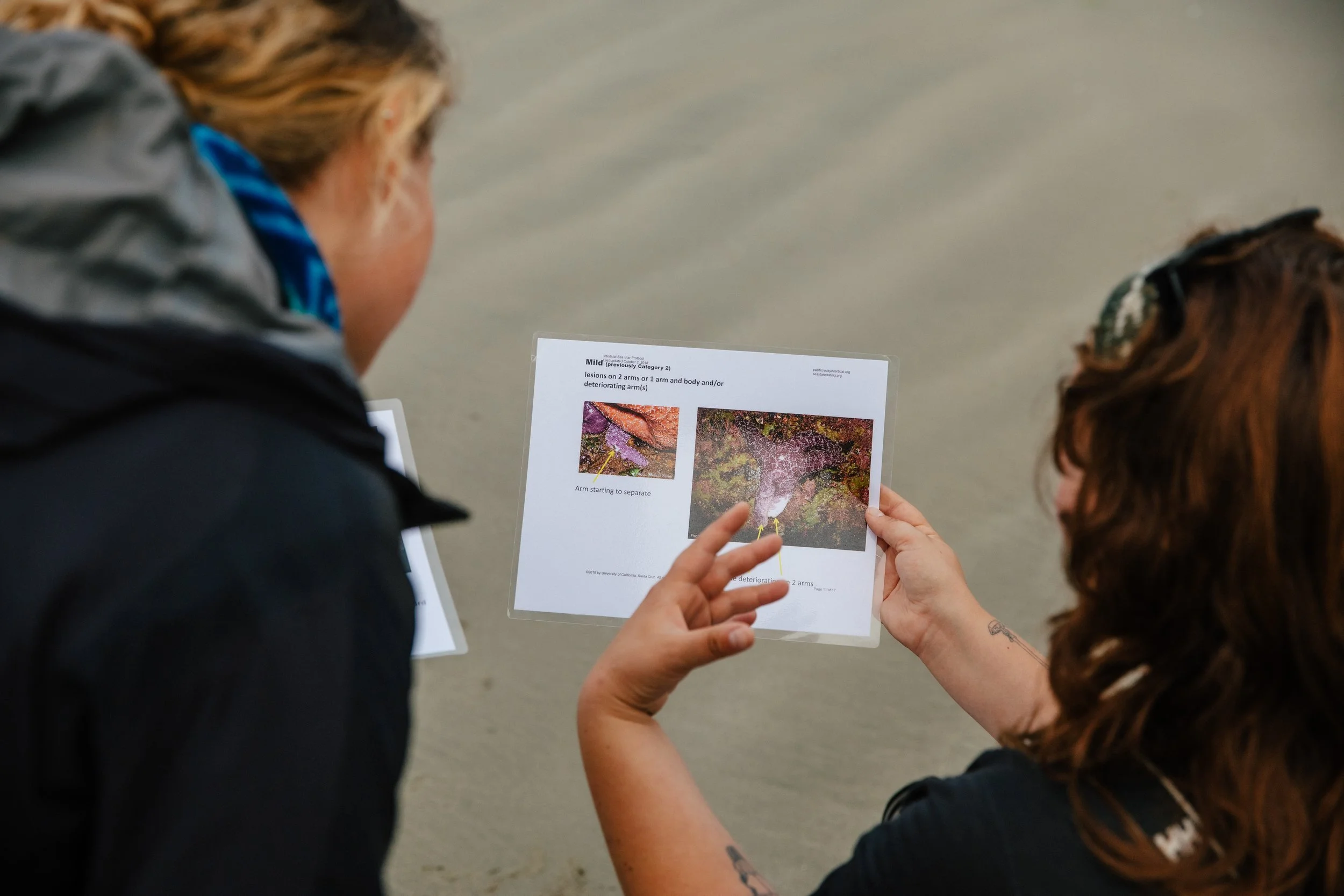
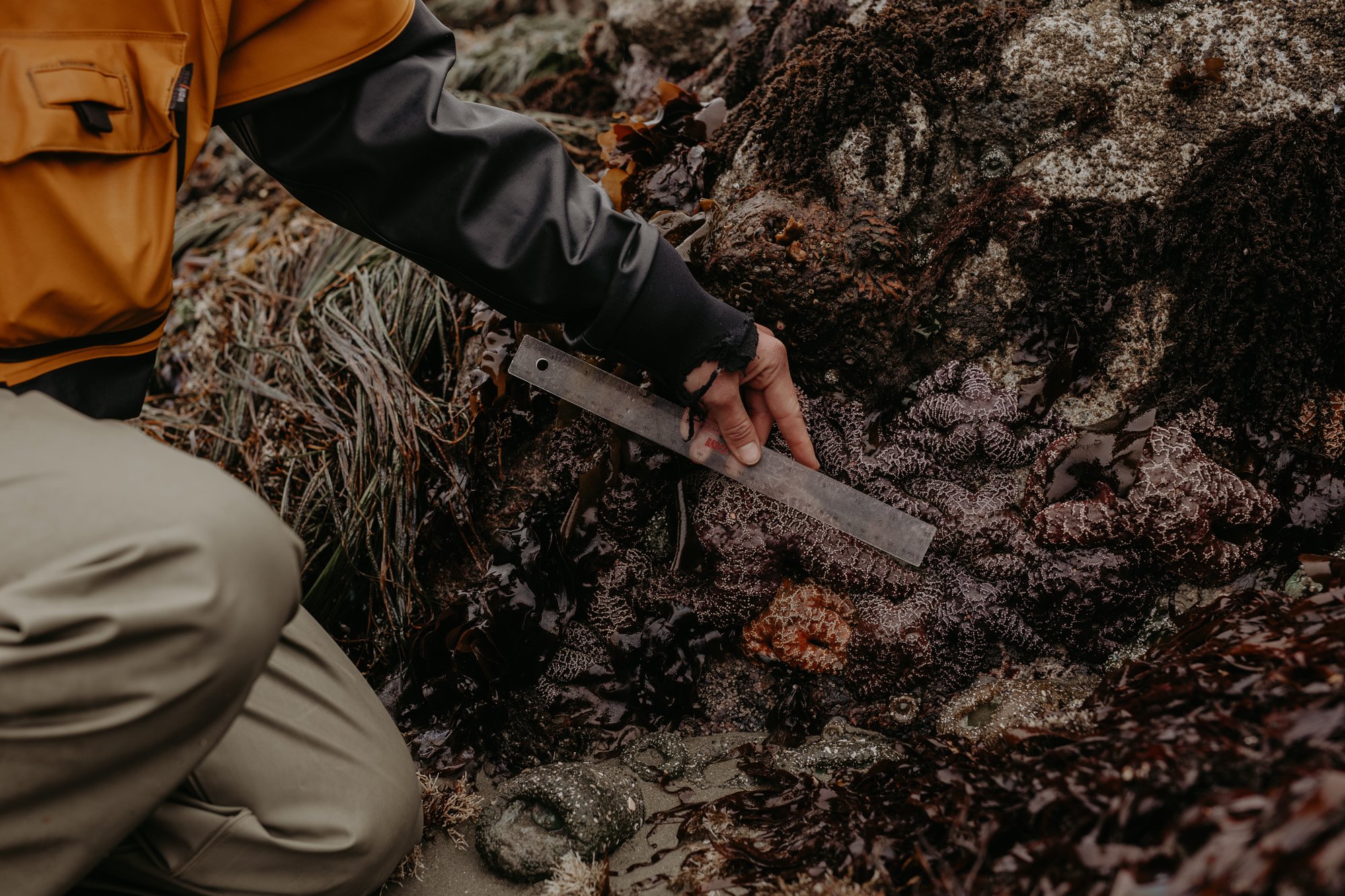
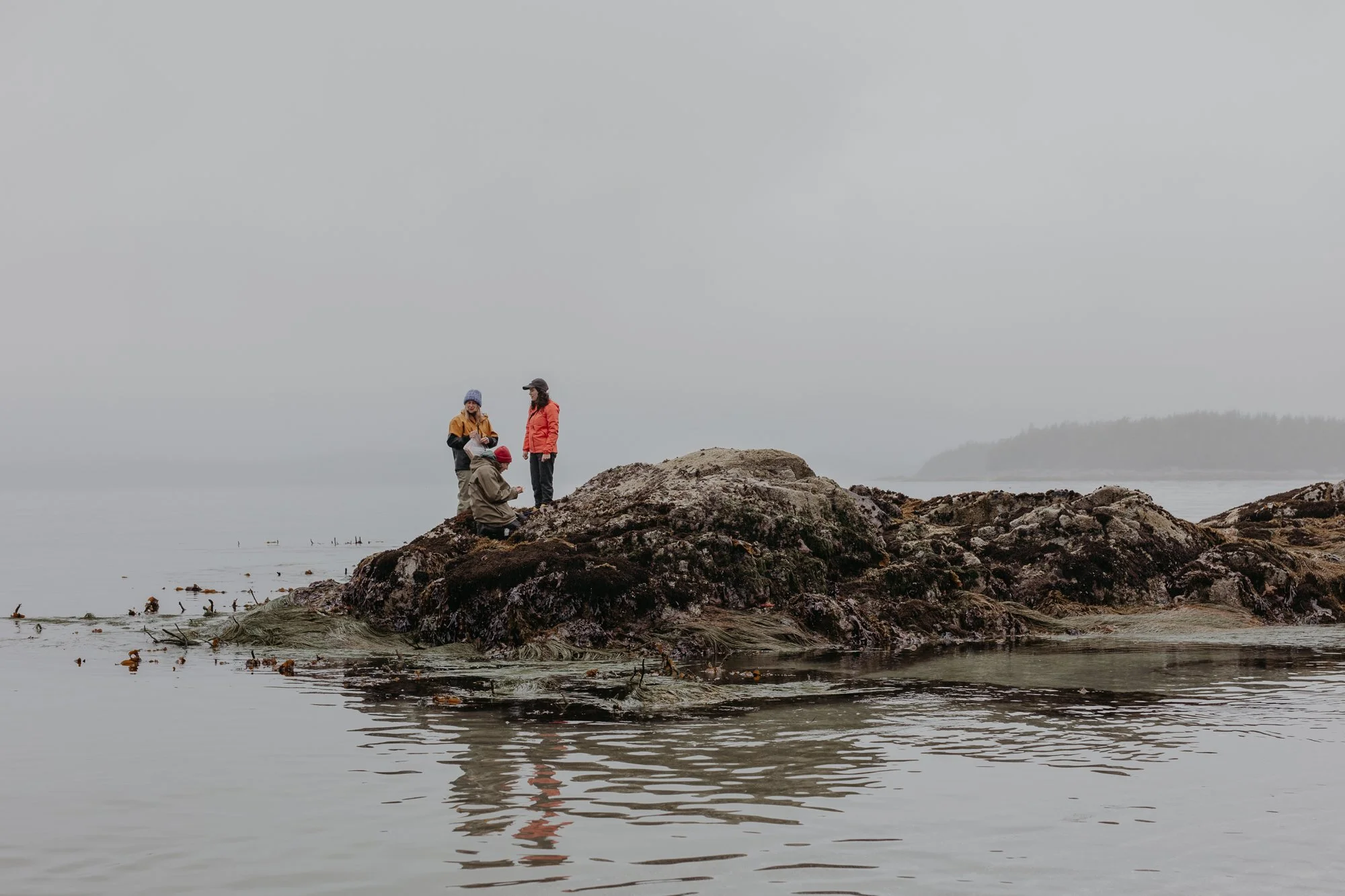
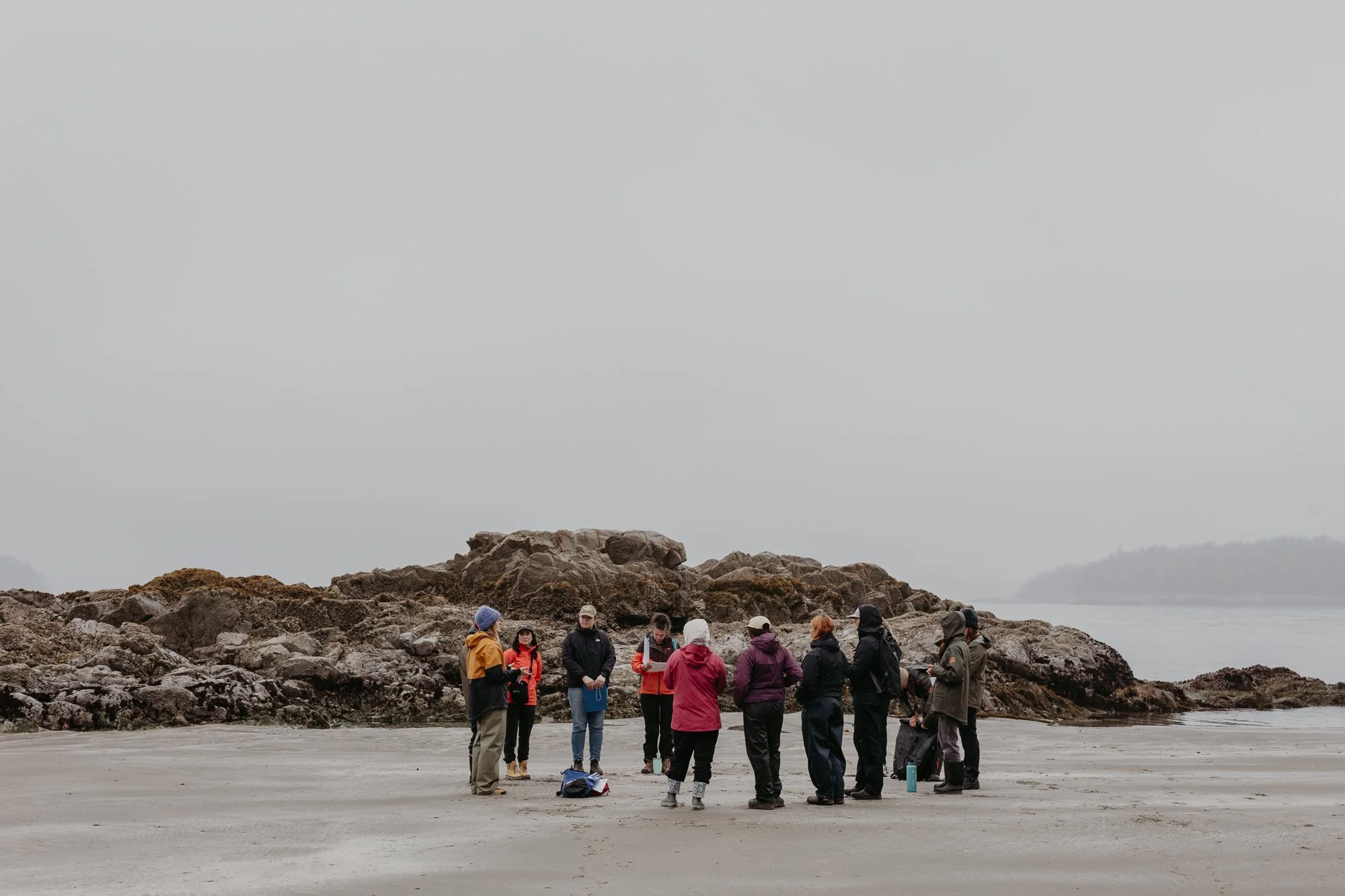
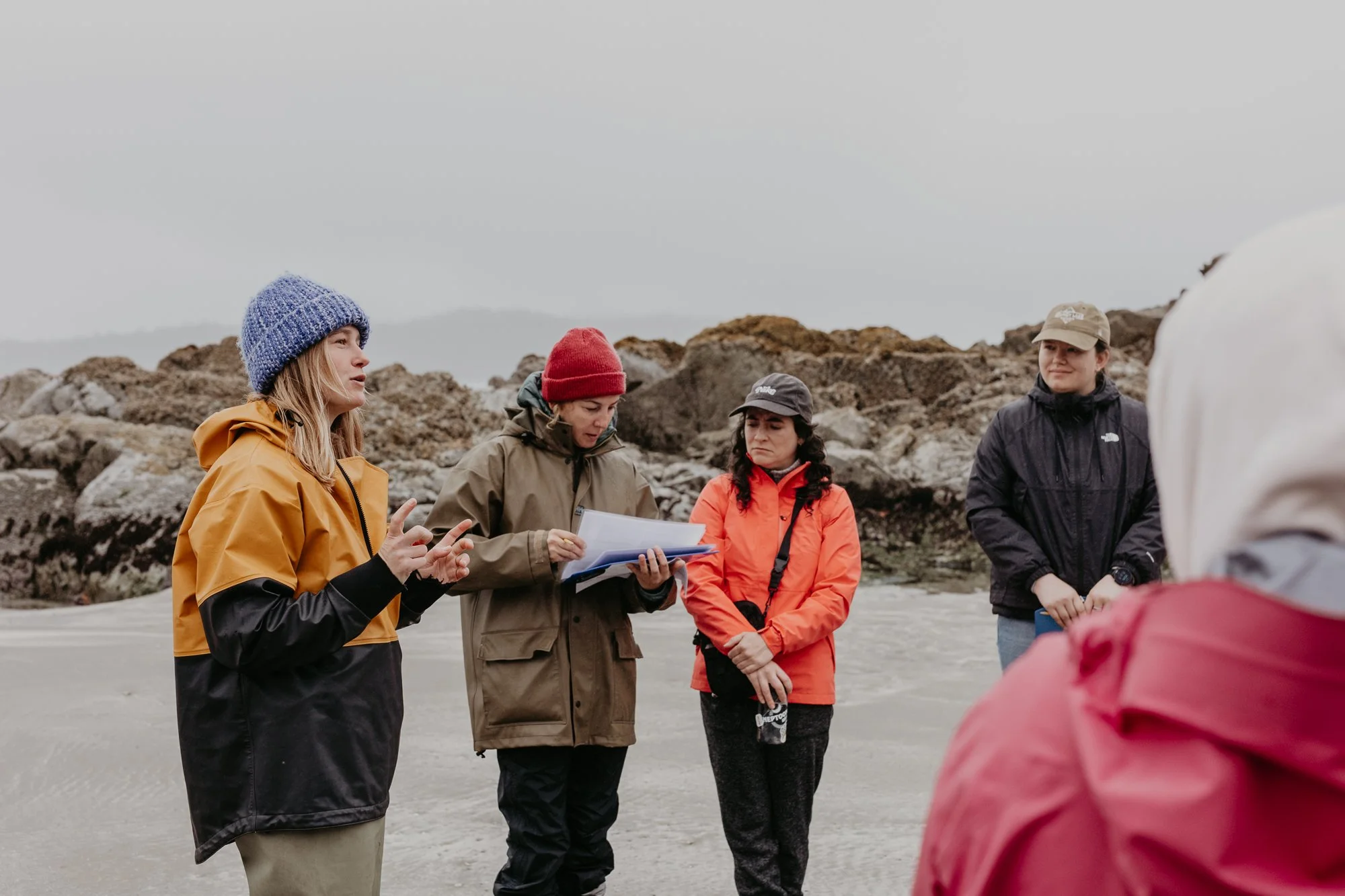
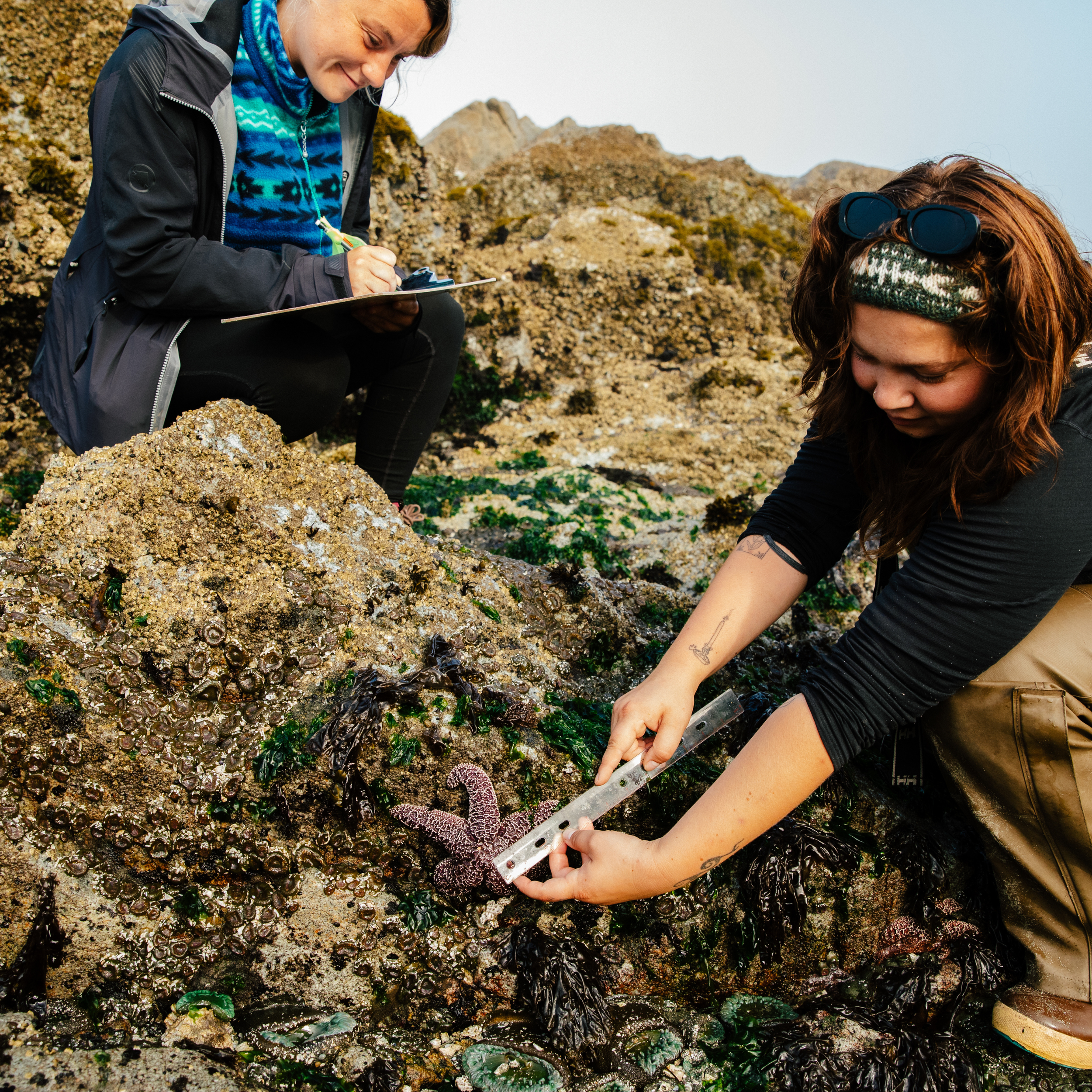
We use citizen-science as a way to expand the spatial and temporal range of our research and to increase public awareness. This program promotes outdoor experiential education and participatory research that engages community members, local volunteers and visitors in monitoring coastal intertidal ecosystems in Clayoquot and Barkley Sound. We partner with three local organizations and businesses to survey several long-term sites. The Sea Star Stewardship Program aims to inspire marine stewardship and encourage locals to become ambassadors for these important intertidal organisms. To learn more about the project, check out our StoryMap below!
Interested in joining us for a survey? Click the link below to learn more:
Thank you to our sponsors and partners for supporting this project!