Restoring “Big Bertha”: Major Landslide Mitigation Begins in Hesquiaht Territory
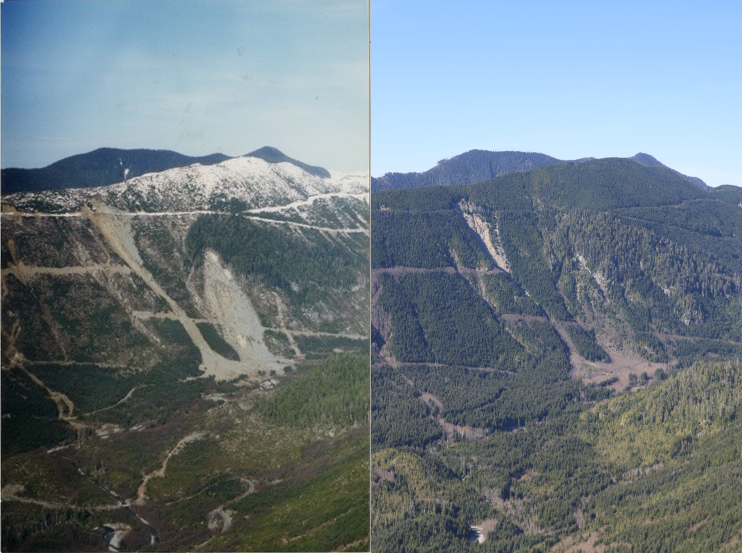
HESQUIAHT HARBOUR, BC — One of the largest and most persistent landslides in Clayoquot Sound on the west coast of Vancouver Island is finally beginning to heal.
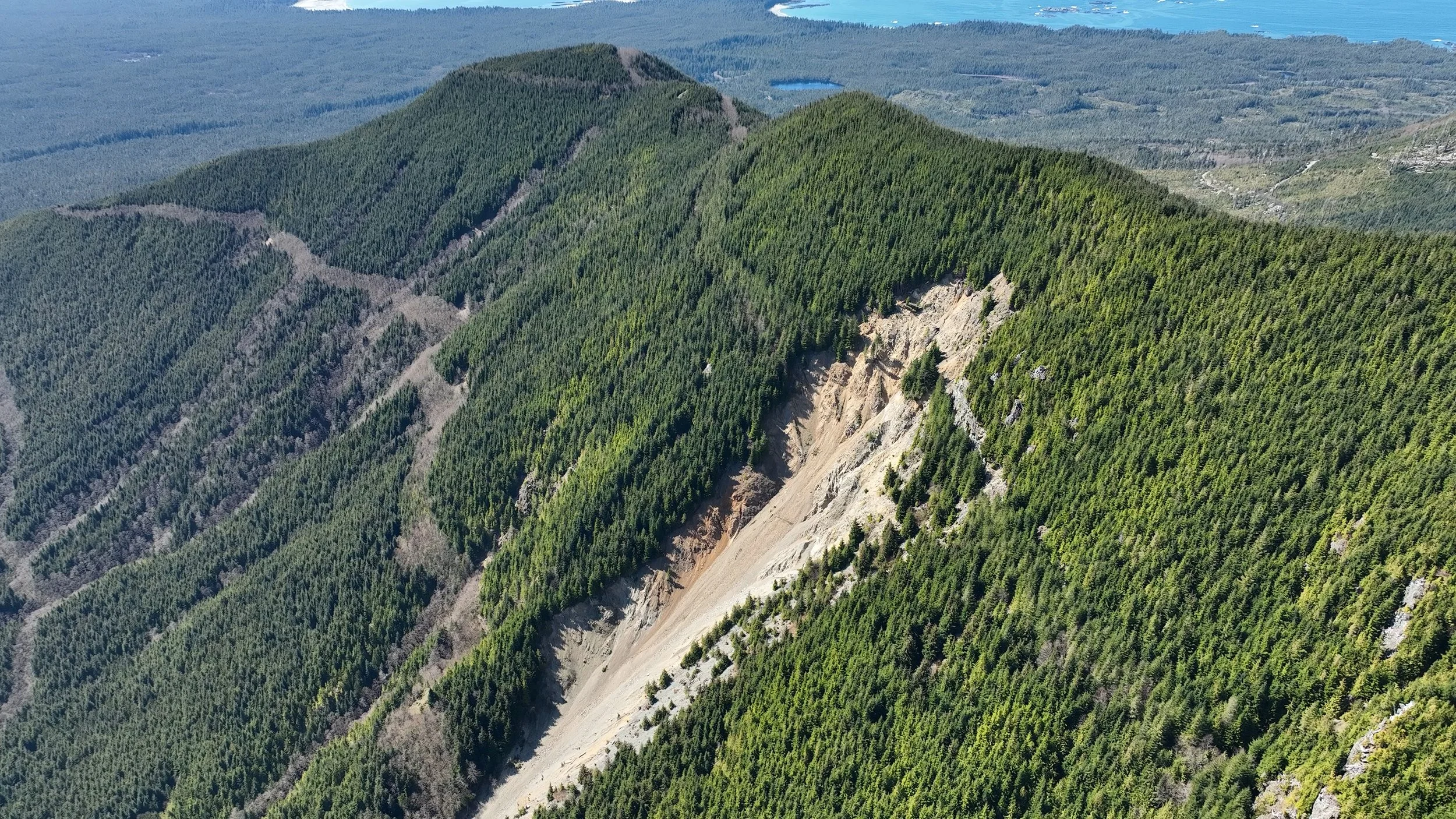
Redd Fish Restoration Society, in partnership with Hesquiaht First Nation, has launched a new phase of restoration to stabilize “Big Bertha”—a massive logging-related landslide that first collapsed in 1999 and continues to send sediment into critical salmon-bearing streams nearly three decades later.
The work marks a significant milestone in a long-term effort to restore watershed health in Hesquiaht territory, where 493 landslides now cover more than 430 hectares (an area roughly equivalent to 1200 football fields). Many of these slides are actively delivering sediment into rivers and streams, decimating local salmon populations.
“This is the kind of work that gives us hope,” said Jessica Hutchinson, Executive Director of Redd Fish Restoration Society. “For years, this slope has been a source of ongoing damage. Now, we’re finally in a position to begin slowing down the damage and supporting recovery.”
A Turning Point for a Damaged Landscape
The landslide known as Big Bertha is one of many triggered by historic industrial logging and road building across steep, unstable terrain. In the Hesquiaht watershed alone, these hundreds of landslides contribute sediment into rivers, smothering spawning beds and degrading aquatic habitat for wild salmon and other species.
For the Hesquiaht Nation, the impacts are deeply felt.
“I remember when they logged this watershed,” said Rufus Charleson, Hesquiaht Fisheries Manager. “I remember the day the mountain came to the river.”
“These streams used to provide a lot of fish for our people. Now many are covered in landslide debris.”
Restoring these systems requires starting from the top of the watershed, stabilizing slopes before meaningful in-stream habitat recovery can occur.
“When this landslide first occurred in 1999, our organization—then the Central Westcoast Forest Society– stepped in to begin stabilizing it, successfully treating about 9.5 hectares of the slope,” said Jessica Hutchinson, Redd Fish Executive Director. “Being back here now, continuing that work alongside Hesquiaht First Nation, is a reminder that restoration doesn’t happen all at once, it takes decades of commitment and investment to truly heal these landscapes.”
Nature-Based Solutions at Scale
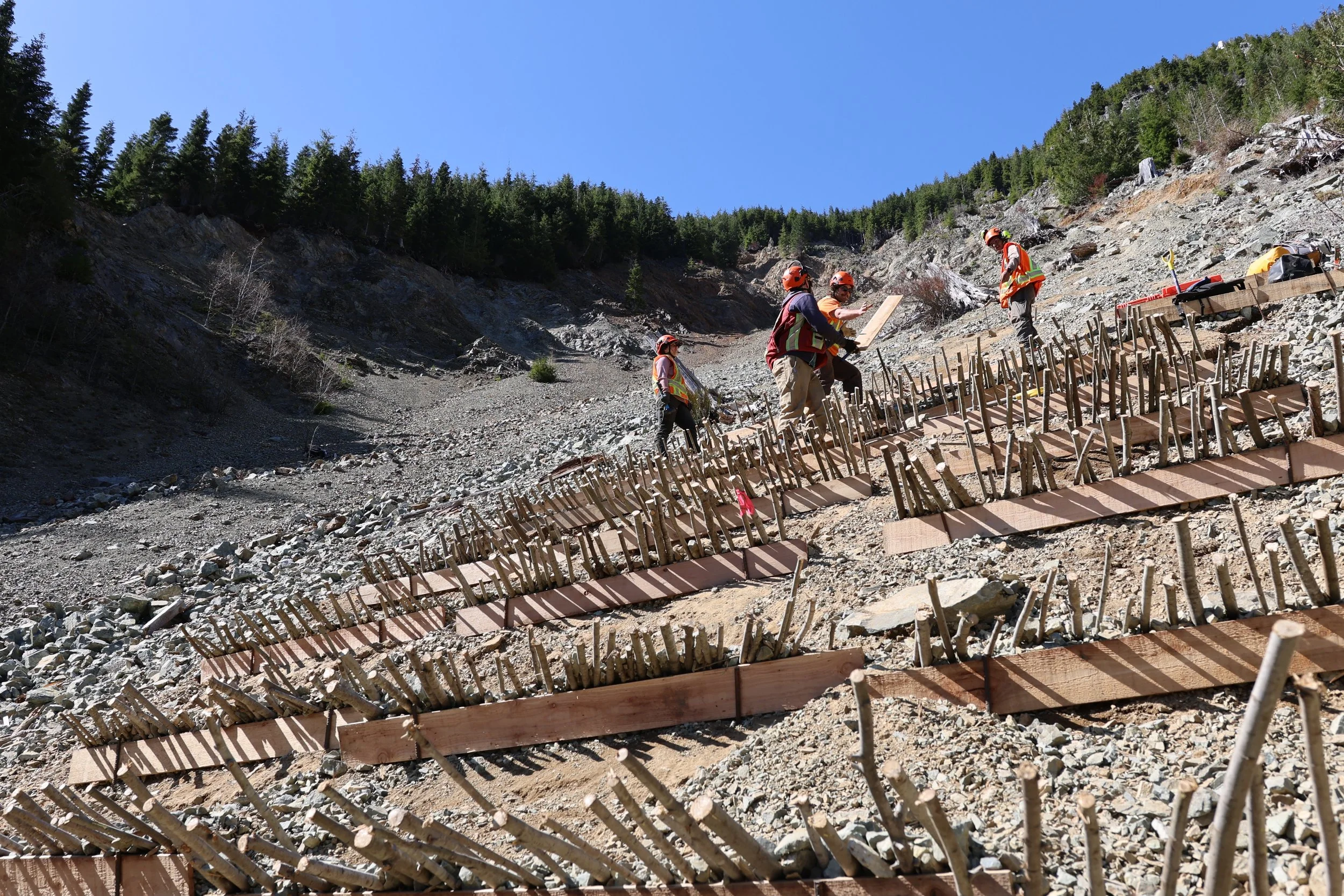
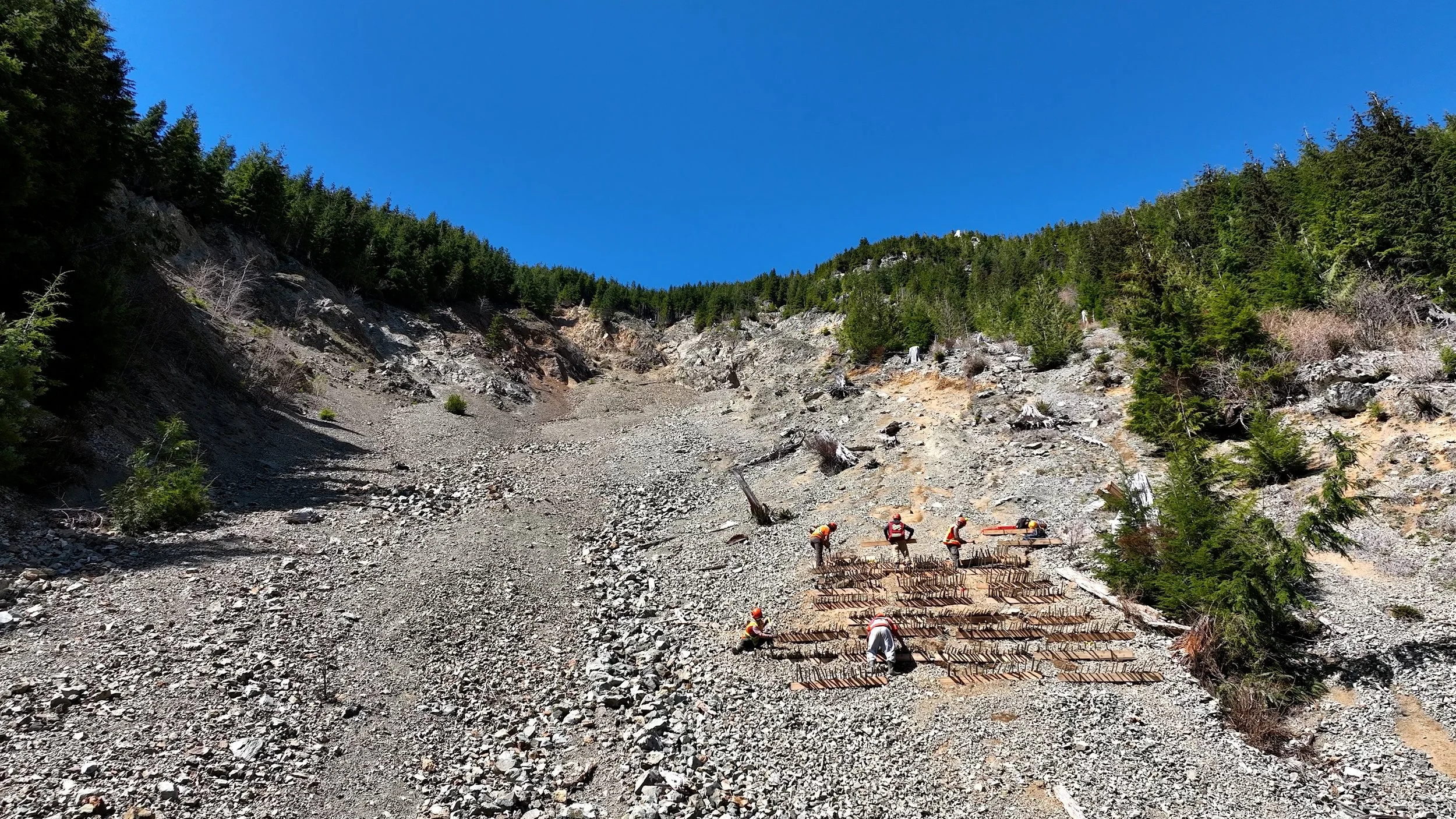
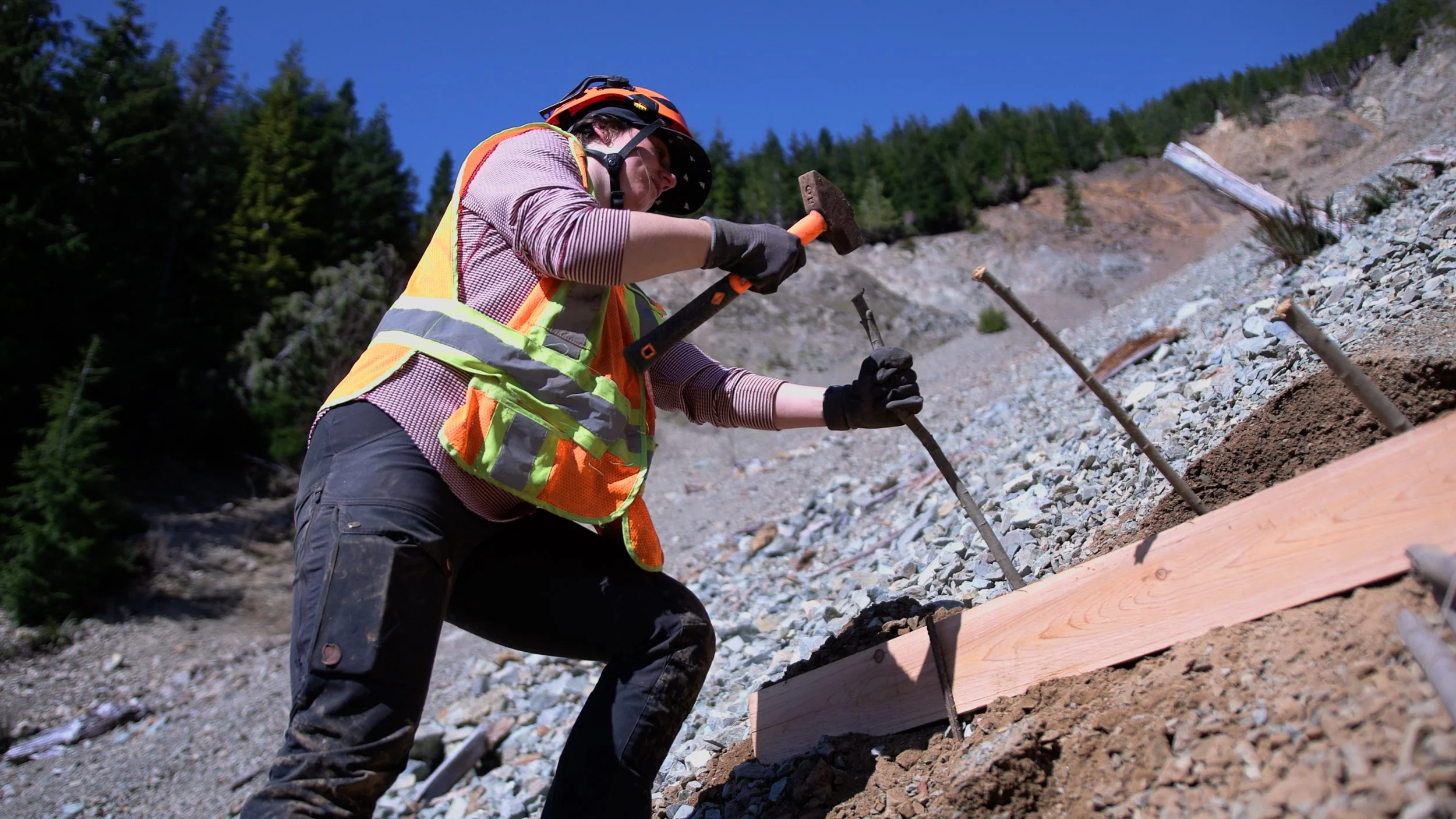
The Big Bertha project will apply a combination of bioengineering and ecological restoration techniques designed to accelerate natural recovery processes, including:
Recontouring and stabilizing unstable slopes
Installing modified brush layers to reduce erosion
Planting native trees and vegetation to rebuild root structure and soils
Seeding exposed areas to initiate ecological succession
Ongoing monitoring with drones to track slope stability and habitat recovery
These techniques work with natural processes to slow erosion, rebuild soils, and ultimately reduce the flow of sediment into downstream fish habitat.
This work is made possible through partnerships and project-based funding, but significant need remains. Continued investment is critical to fund this work and expand restoration efforts across Hesquiaht territory, which remains one of the most impacted coastal watersheds on Vancouver Island.
Media Contacts:
Jessica Hutchinson, Executive Director, Redd Fish Restoration Society
info@reddfish.org
250-726-2424