
History
On August 29, 1997, a deceased killer whale was reported drifting approximately 17 miles offshore of Tofino, along the exposed west coast of Vancouver Island. Determined that the animal not be lost to the open ocean, SIMRS founder Rod Palm undertook the formidable task of towing the whale behind his small research vessel toward Strawberry Isle.
After 11 strenuous hours navigating Clayoquot Sound (supported along the way by several whale-watching vessels that provided fuel and food) Rod and the whale finally reached shore. A full necropsy was conducted under the guidance of Dr. Craig Stephen of Vancouver Island University, with Graeme Ellis of the Nanaimo Biological Station, Dr. Jane Watson of Vancouver Island University, and Rod Palm in attendance. Subsequent DNA analysis by Dr. Lance Barrett-Lennard of the Vancouver Aquarium confirmed that the whale belonged to the offshore killer whale population.
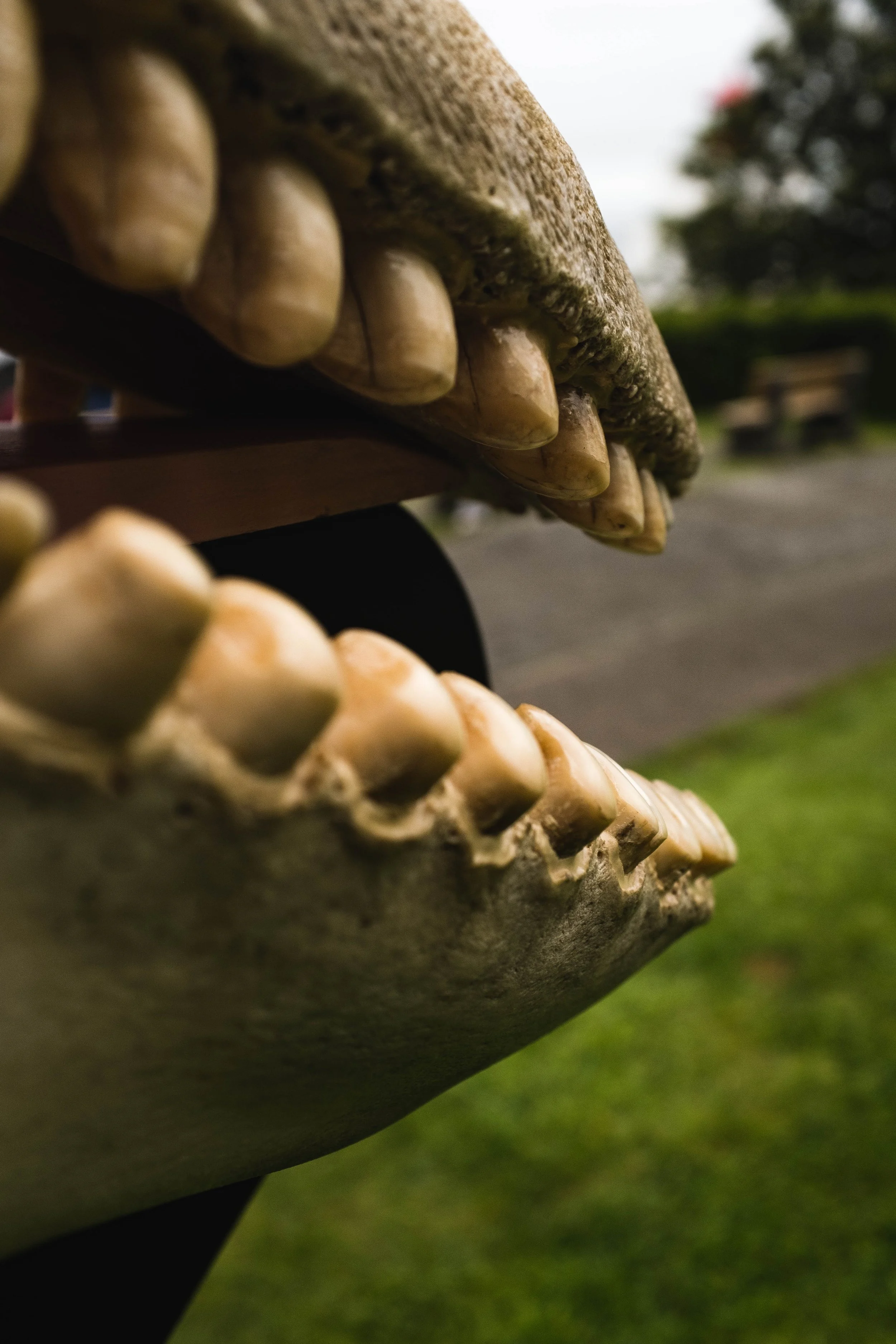
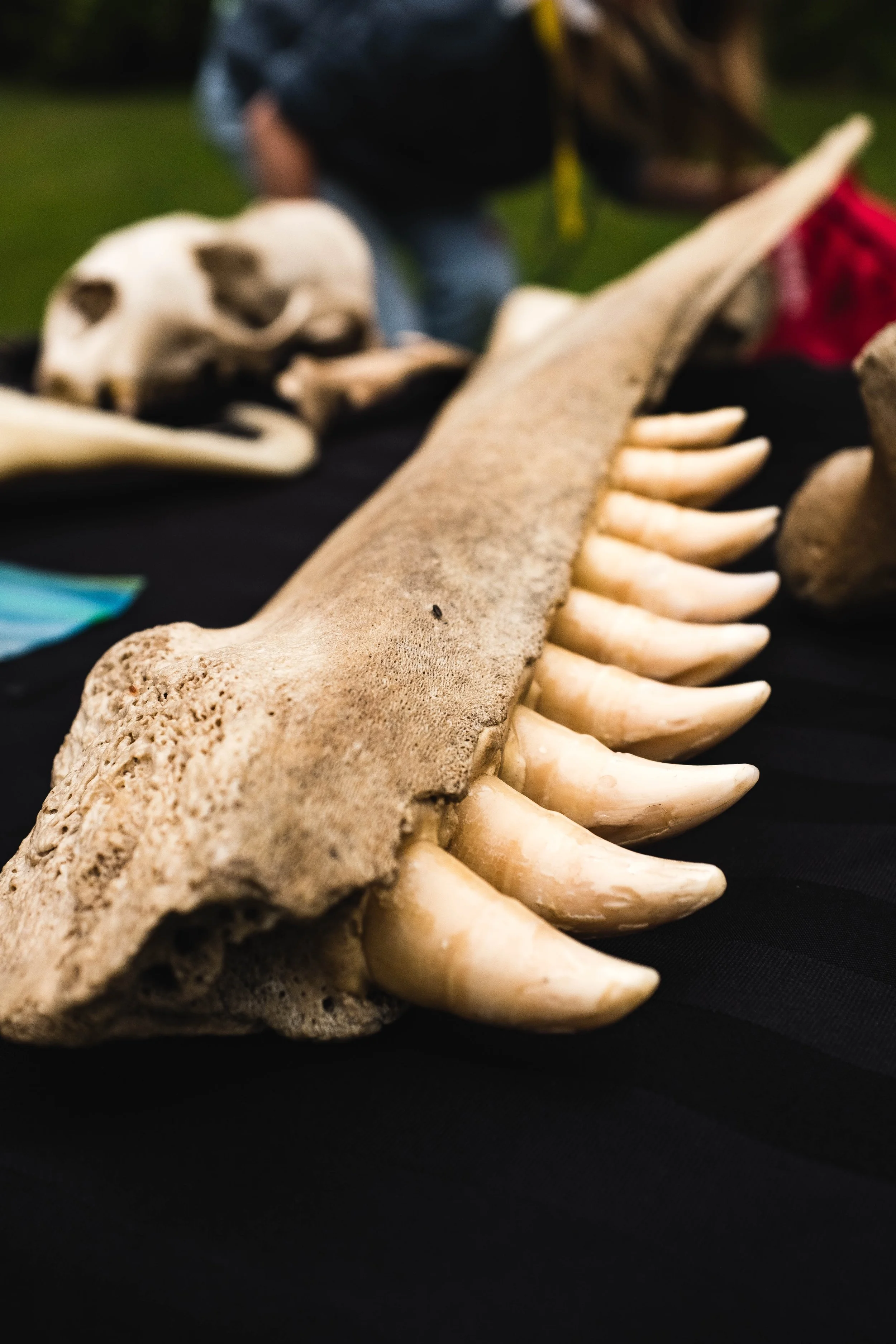
Graeme Ellis later identified the animal as O120, an offshore female measuring 5.5 metres (18 feet), based on her distinctive saddle patch and dorsal fin. No clear cause of death was found, though her heavily worn teeth and thin blubber suggest that she may have been old and far removed from her home in more southern waters. A massive cavity extending into the jaw bone may also have been a factor.
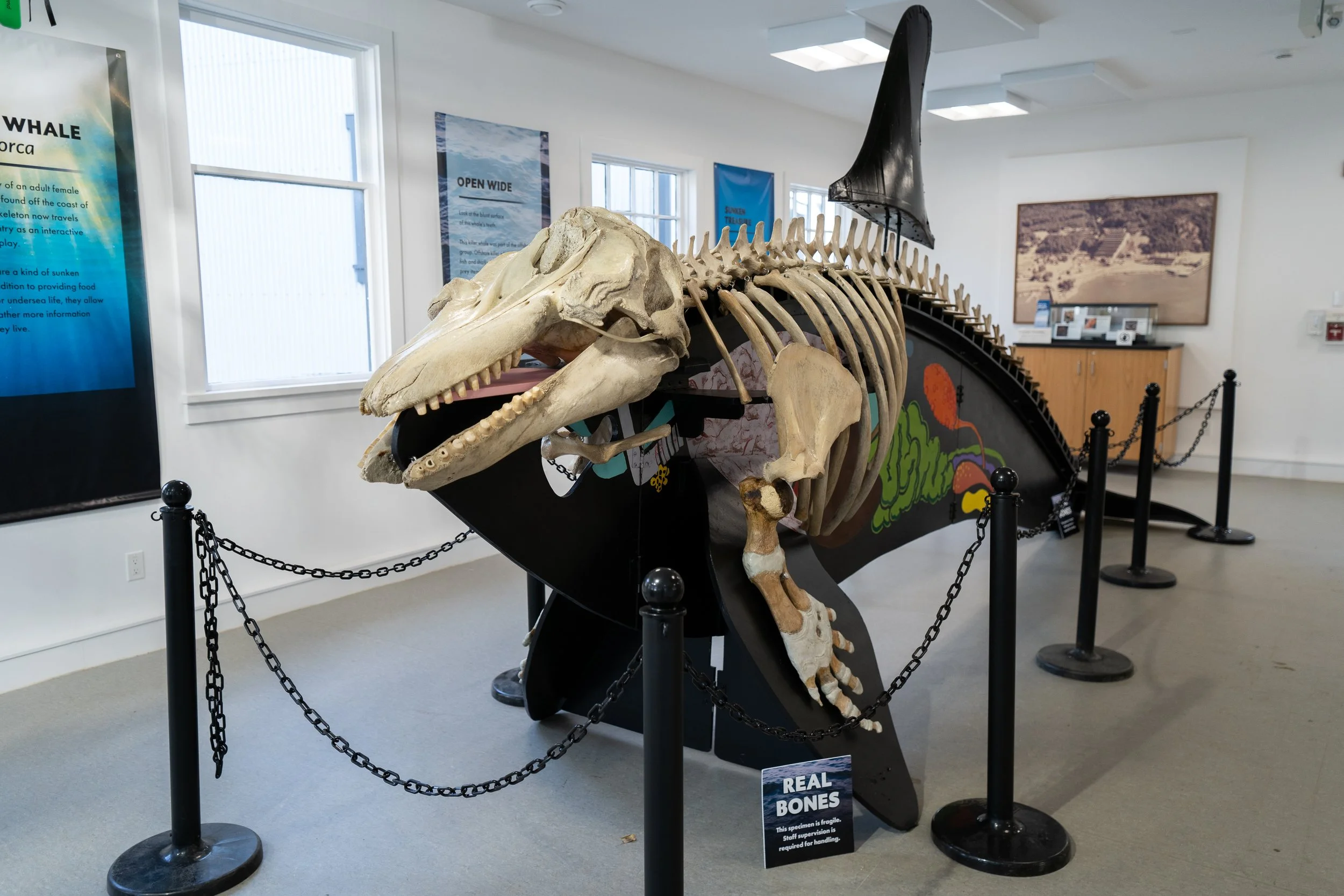
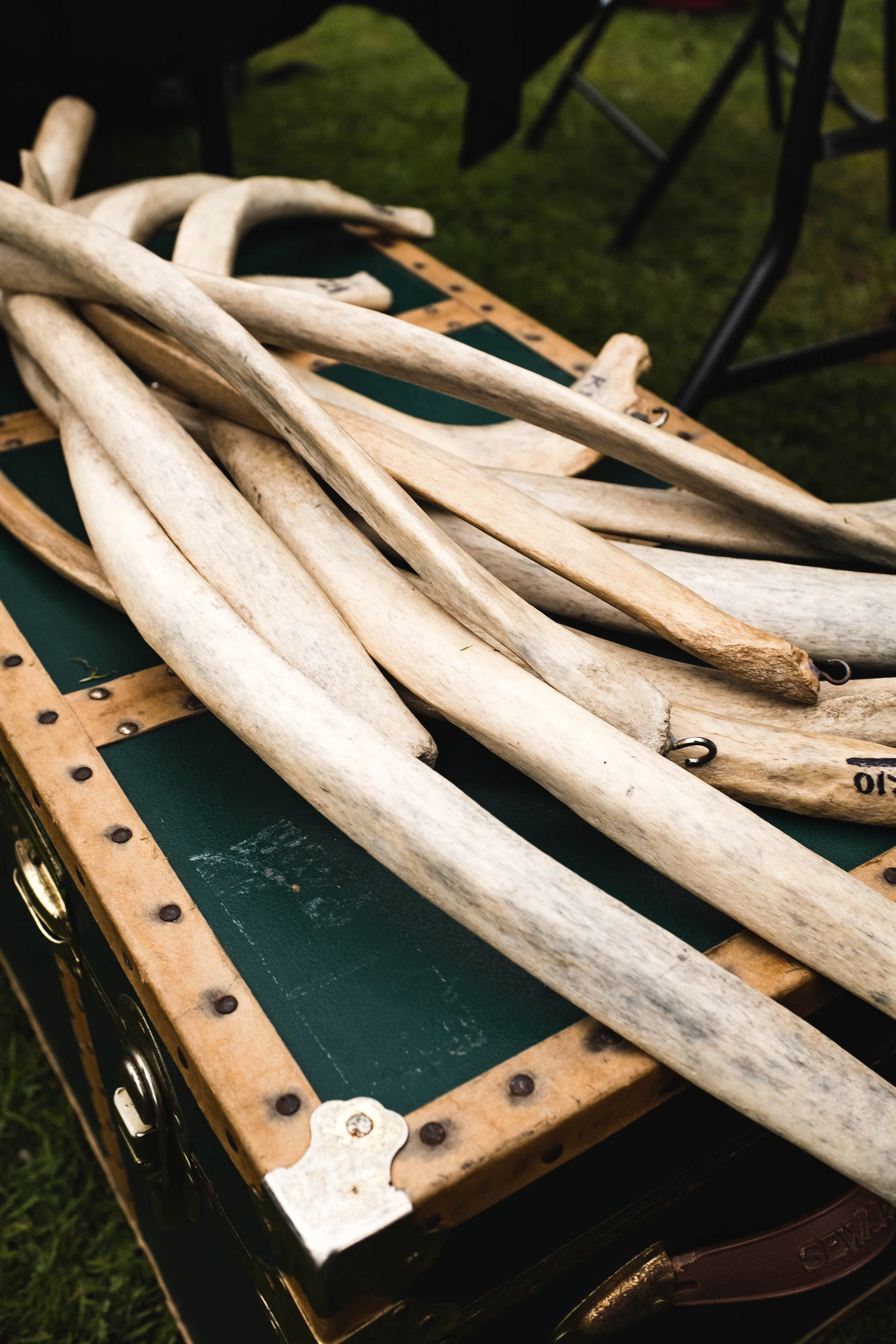
In the days that followed, Rod and his team undertook the demanding work of preparing the remains, carefully separating, cleaning, and preserving the bones through burial, submersion, and controlled boiling. After a year of natural sun-bleaching, the bones were ready for final treatment. Dominique Dupuis (Pipot) then coordinated a dedicated team of volunteers who contributed nearly 700 hours scrubbing the bones and sealing them with multiple coats of non-toxic, penetrating epoxy.
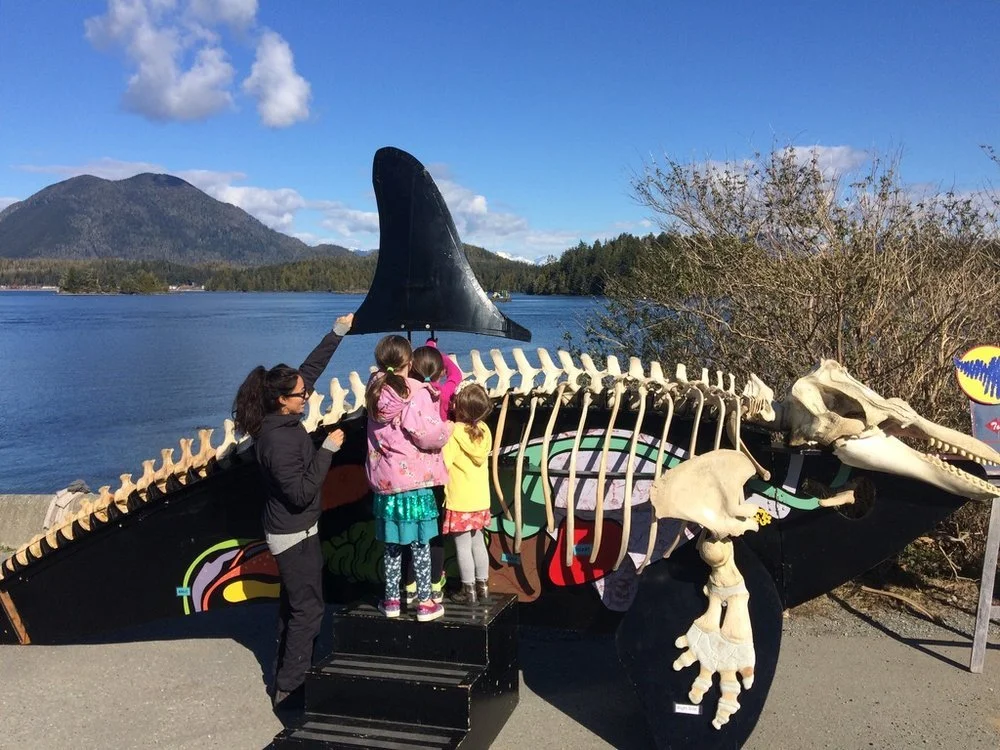
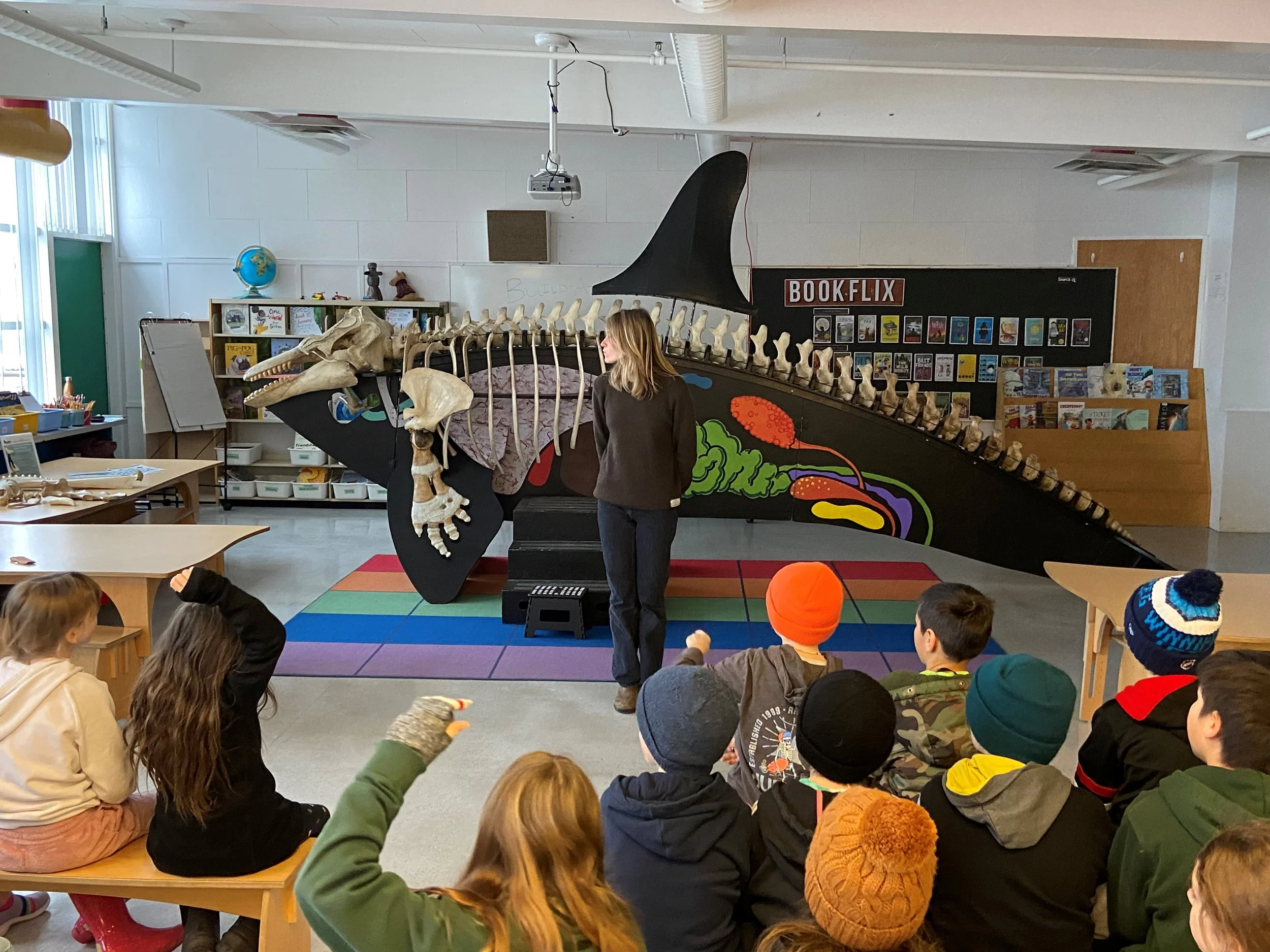
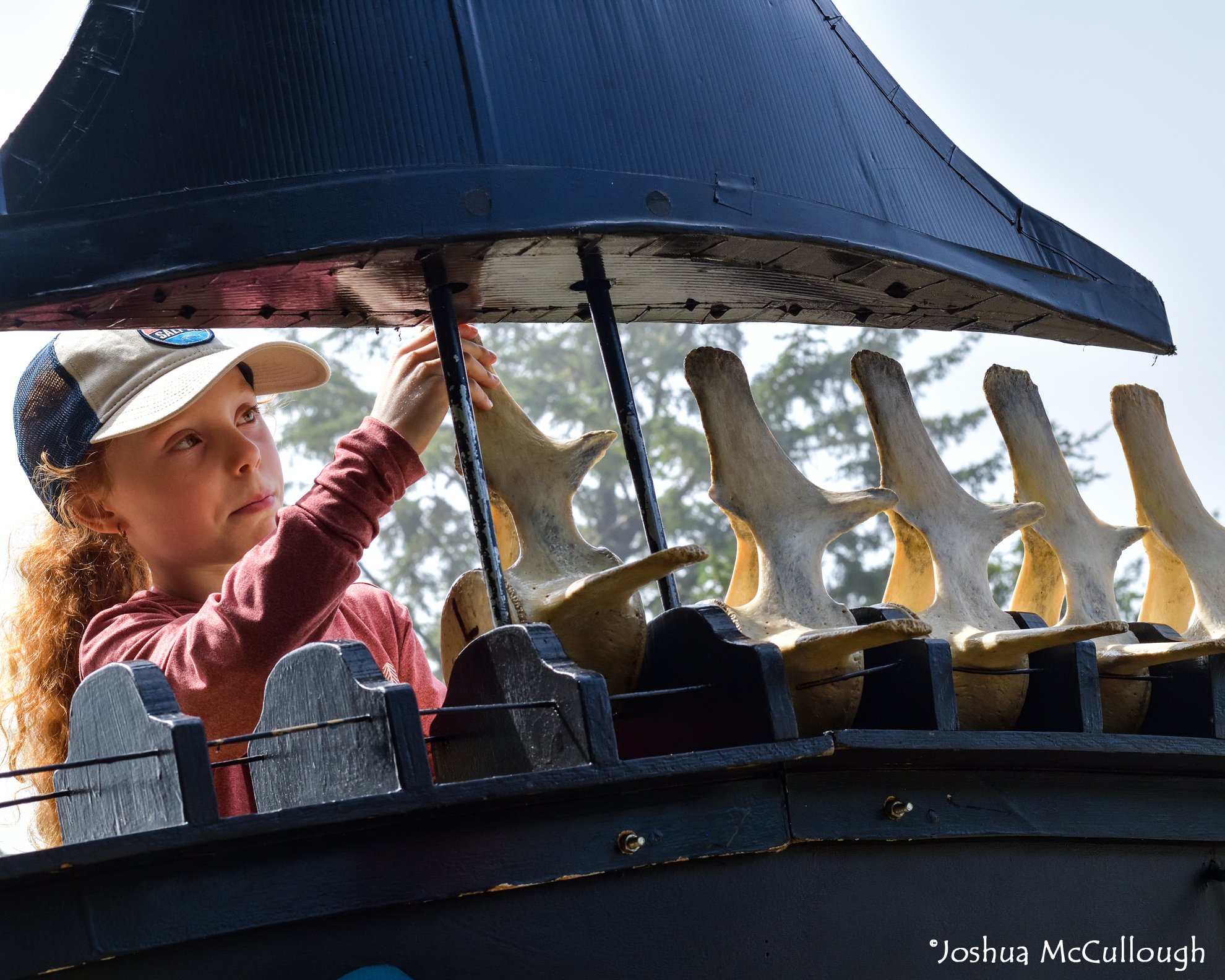
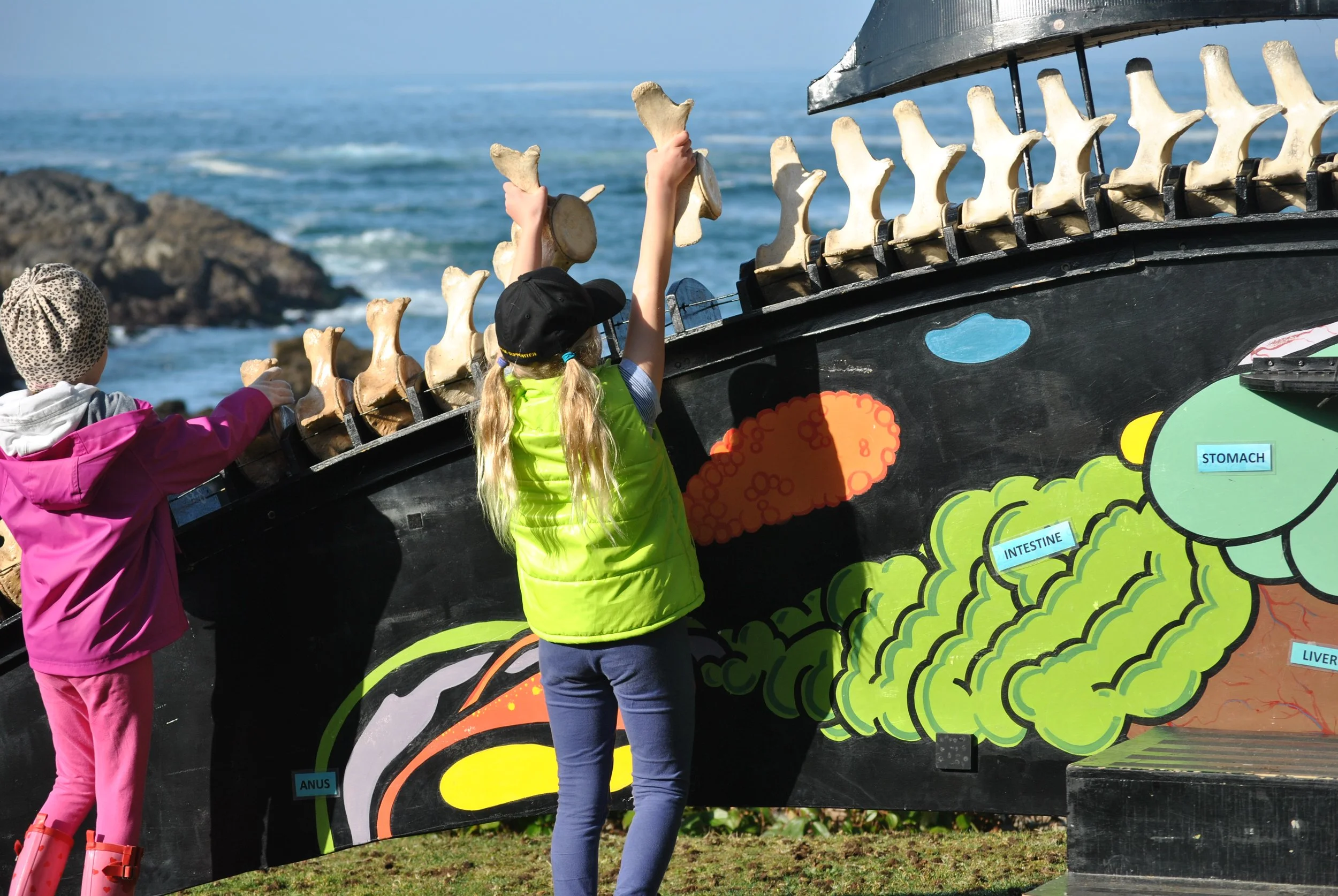
Pipot and Robinson Cook went on to design and build the innovative, orca-sized internal framework that now supports the skeleton and illustrates the placement of the animal’s internal organs. With that, Build-A-Whale was complete!
Over the years, Build-A-Whale has been maintained by Albert Sheperd who has upkept the bones, aided in program development and provided us with endless enthusiasm and passion for education, marine science and community. Thank you Albert.
Interested in hosting a Build-A-Whale event? Please fill out the form below and we will be in touch.